Internet flâneur · Built Pagecord


Posts tagged with productivity

New Year, New You

I did a quick talk called New Year, New You at the FreeAgent engineering all-hands recently. I thought I'd write it up in long form.

It's 2022! 🎉

Happy new year everyone! I wanted to do a talk about change, give people some food for thought. I'm not trying to suggest you have to do all or even any of these things, they're just ideas that are in my head.

New year is a good time to think about changing stuff isn't it because our old habits die hard. That's what I think, and it's what Bruce would say.
Uploaded image

And what I mean by old habits is:

  • Same old routine
  • Same old backlog
  • Same old todo list
  • Same old meetings
  • Same old, same old...

It sometimes feels a bit like this doesn't it? It does for me, and not just at work either, life generally I suppose.

People like to do resolutions don't they, because it's a good time to change things. People have had time off, perhaps a couple of weeks or maybe more. Nobody can remember what they were doing back in December so actually it's a great time to start afresh, clear the decks and capitalise on it. It's a bit of an opportunity.
Uploaded image

🥅 Set some work goals

You don't have to have goals. Huddersfield Town don't have goals most of the time, which is a bit of a shame. It would be nice if they did.

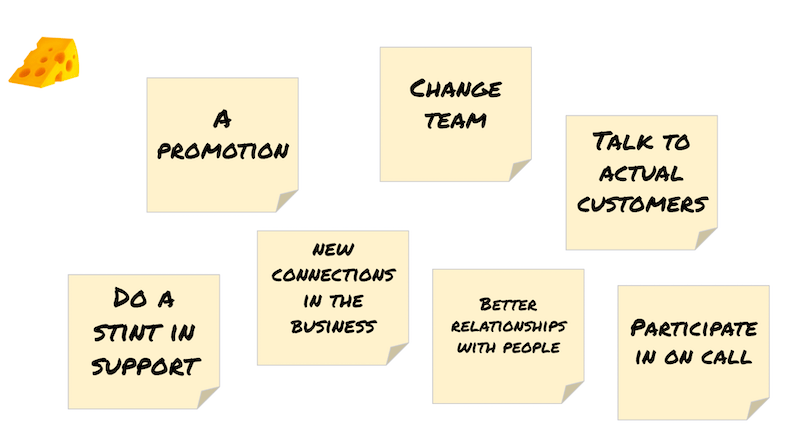
Talking about goals is a bit cheesy, work goals, but they are quite good. You can think about what do you want to do, or achieve. A promotion, that's a bit of a goal. You might want to talk to some customers. Engineers should work as close to the customer as possible, so maybe we should talk to some customers? You could do that, talk to them and write about it. Talk to some other people in the business, what would become of that? You might want to change team, to a platform team or the other way round. You might want to participate on on-call? It's a good thing to do and you'll learn a lot. Don't start looking for a new job though, not unless you've tried all of the above beforehand – that would be helpful 😉
Uploaded image

🏡 Habits

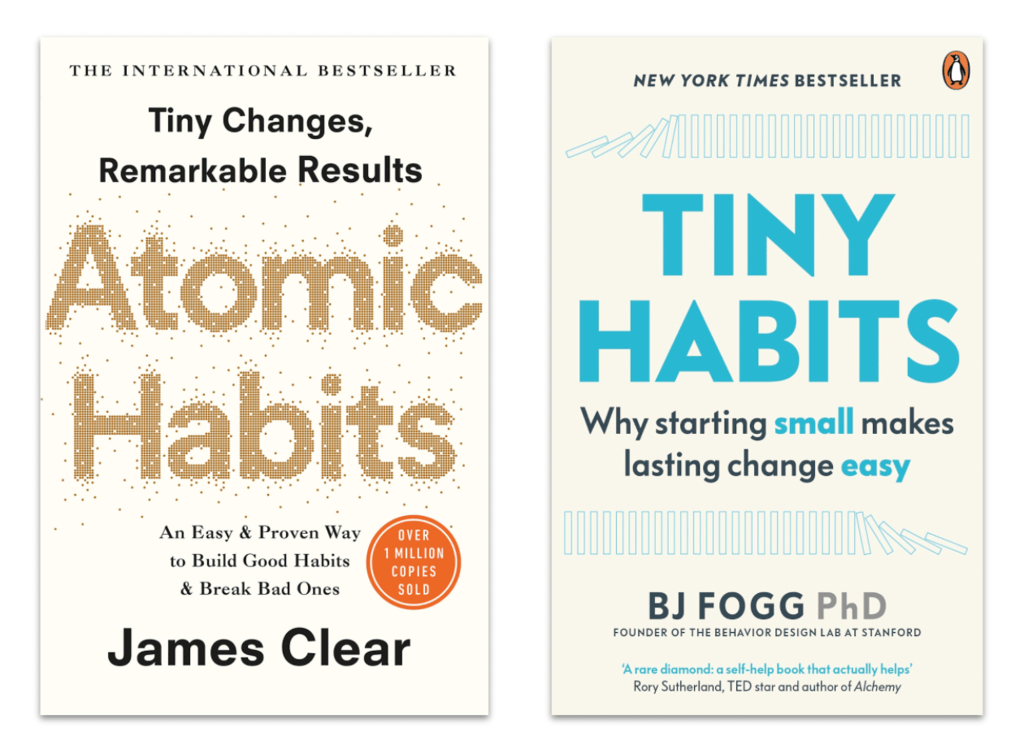
I talked about habits, these 'same old habits', bad habits, whatever. Good habits, really good habits is how people get things done. Don't take my word for it, there are a couple of books here that are quite good:
Uploaded image

These are all about getting 1% better every day or every week. James Clear talks about the aggregation of marginal gains and he uses British Cycling as an example. How did British Cycling go from being terrible for decades to winning the Tour de France, and it's all about getting 1% better every day. Improving our habits is a good thing to do and you could start by maybe reading these books.

https://www.youtube.com/watch?v=U_nzqnXWvSo

🔁 Cancel recurring meetings

I'm not saying recurring meetings are bad per se, but maybe they are. You put them in as recurring and you don't necessarily challenge the fact that they're there do you? So – new year, new you – you could cancel them all, talk to your team and say should we just get rid of these and see what happens. Then if there's a need to then have this meeting again in the future then of course you can consider that, book it in, and make it recurring again. Or maybe not! Maybe free up some time in your diary that you wouldn't normally have had. Maybe you should do that.

📬 Clean your inbox

I agree with this, but I also think it's less important over time and maybe it should be more about Slack but I don't actually have anything useful to say about that. I haven't really figured it out to be honest. Anyway, with your inbox, mine has been an absolute nightmare in the past but it's pretty good these days. There are lots of things you can do to make it look like this, which is what mine looks like most of the time now:

Uploaded image

Mainly because of filtering anything that has the word “unsubscribe” in it, and now using this Promotions tab which, from what I gather, is a bit like a spam filter but spam for recruiters and stuff, but it tends to work quite well. I wrote a blog post about this a while back. You can have a read of that if you want, but it's a good thing to do because honestly it's quite nice having an inbox that looks like this. If only we could figure it out for Slack.

🗓 Colour code your calendar

I thought this was good. I have stolen it from Gergely Orosz. His point here is to try and identify where you're spending your time.

You have a calendar full of stuff and if it's all the same colour then you can't really distinguish one thing from another, but if you say here are my one-off meetings, here are my recurring ones (which is interesting because you can identify which ones you want to cull or not), hiring and 1:1s. And then there are the Very Important things, and the idea there is that you can identify the important ones because it will make you get prepared – "I've got an important one on Friday, I better get prepared for that". I quite like that idea.

So that might be something that you want to do. For engineers, hopefully your calendar doesn't look like that, though if it does then you definitely need to get cleaning it up. You don't really want a whole wall of colour do you, you need thinking time, whatever.

Productivity/sanity/calendar tip: color-code your meetings!

Here's how I color-coded my calendar so I could get a sense of which meetings are:
- One-offs
- Recurring
- (Very) important ones
- 1:1s
- Recruitment / hiring
- Non-work time
- Important non-work events pic.twitter.com/HYUTiXY72u

— Gergely Orosz (@GergelyOrosz) December 30, 2021

🚧 Change your team processes

It's a good time to reflect on how you work. Talk with your team, get feedback. Is it working well? Could it be better? Do we have too many Trello boards, too many cards, too much noise, shall we clear them out? Shall we try something new?

You can do this!

There's nothing stopping teams trying something different. Report back, how does it work? It's a good opportunity to do that, especially with Wiggle Week around the corner.

🤗 Have fun!

Have fun is the final one. It's a new year and, y'know, work-life balance is really important. Hopefully you have a good work-life balance at FreeAgent, but if you're not having fun then ask yourself why and try and fix it.

That it really. I winged it a little bit, but maybe it's useful? Let me know what you think! I'd be interested to know who does cancel those meetings and whether it goes spectacularly badly or otherwise. Don't blame me though, I'll be gone by then 😜
Canning the new variant of spam

Spam was solved for a while but it's back with a vengeance. Where do we go from here?

Uploaded image

I got my first email address in 1992. It was something like [email protected] and I had to log into a Solaris terminal on the 13th floor of a loathsome, brutalist high rise to access it. I’d sometimes get email from my CS tutor and occasionally digital pen letters from random American students at curiously named colleges like Brown and Penn State that I’d met in obscures IRC chat rooms late at night in the lab. That sounds a lot more creepy than it actually was, I promise.

In the three years that I had this academic email address I don’t remember receiving a single spam. Maybe spam didn’t exist yet. Or maybe spammers were active but didn’t yet have the luxury of harvesting gazillions of legit email addresses for a few ETH on the dark web. To be honest, even if an entrepreneurial GenX crime syndicate did try and sell me Viagra (which didn’t exist), they couldn’t extort money from me because e-commerce hadn’t been invented. Plus I had no money.

My next email was something forgettable that I didn't really use and was forced upon me by a dial-up ISP. After that, I think, I got a Hotmail account along with tens of millions of other people. And because of cgi-bin and SSL, extortion was in reach. And thus, email spam was born.

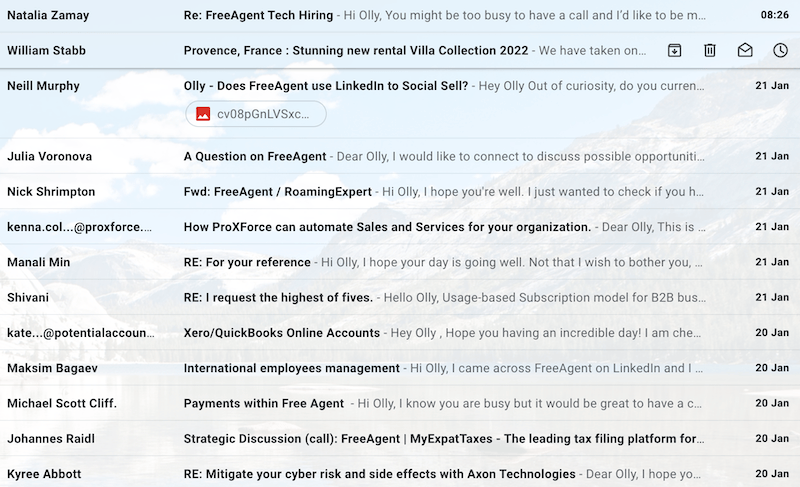
I changed email providers from Hotmail to Yahoo to Gmail and spam was never that much of a problem. It turns out spammers quickly met their match with Bayesian algorithms and so it stayed for many years. In the past few years, things have started to change. More and more emails are hitting my work inbox that I wouldn't consider classic spam but were unsolicited all the same. At first they made me feel popular – here were sales people who had heard of me and figured I was in the market for their enterprise products! Why thank you! Naively, I even replied to some of them to say thanks but no thanks. I diligently clicked on their unsubscribe links for a while, until I realised this verified my existence which gave the crims a real taste for blood, leading them to triple-down on me. I tried blocking the senders, but the sea level kept rising. I ended up giving up, marking them as spam which worked to some degree but because the emails are technically (semantically) legit, the spam filters really struggle, increasing false positives while leaving a large chunk of dodgy emails in my inbox.

Uploaded image
Spam not spam

These new emails are spam (they're unsolicited email after all) that is probably sent by bots, but rather than broadcast to millions in bulk they're being far more targeted. The senders are still peddlers but rather than Viagra, they're peddling recruitment, cloud products, offshore dev teams and advertising opportunities. They’re not classic spam as we know it, they're a new and more virulent variant.

Unfortunately it doesn't look like we're going to eradicate this new spam generation with traditional filters any time soon. You can free your inbox with this one neat trick but you need to combine this with some additional brute force. You can block senders but it won't be very effective – every nu-spam seems to always come from a unique address. Those who are technically inclined can wrangle Gmail filters and contacts to create an allowlist so you block every sender other than those in your contacts, then gradually build it up over time. This is painfully draconian, but it's the only option I can think of. It's worth noting that this is the approach taken with The Screener in HEY – you have to verify every sender before the mail hits your inbox.

The fact we're reduced to this experience and inconvenience reflects badly on email which is a shame. Email services (or email clients) can help solve this, but most of them currently don't, or won't. I think we'll see this start to change. Email isn't going away and supposed challengers to email such as WhatsApp have started to encounter similar problems. Email has endured worse in the past and it will overcome this latest breed of attacker just as it did the last time.

Photo by Hannes Johnson

📪 Free Your Gmail Inbox

Your inbox is probably a noisy place that you don't enjoy visiting. Am I right? Here's what to do about it.

Uploaded image

I recently read the following tweet which motivated me to clear out my work inbox for 2021 (I only use Gmail for work).

I'll keep tweeting this until I wear it out because it sorta changed my life 😂

If you want to avoid 95% of promo spam in your inbox, just set up a Gmail filter that moves any email with the word "Unsubscribe" into a separate folder.

Welcome to a clean inbox.

— Julian Shapiro (@Julian), April 27, 2021

You can do the same thing in Fastmail, Yahoo or whatever, but here’s how I did it in Gmail. If you’re using HEY this entire post is probably irrelevant!

Step 1: Move Gmail to the standard, boring old Inbox format

You need to do this first. The default tabs that Gmail introduces are not an efficient way of working at all.

Uploaded image

Choose "Default" for the type then turn off Social, Promotions etc.

Step 2: Archive everything in your inbox

Ok, perhaps keep the few (and it will be only a few) emails that you still need to action, but other than these clear it out. Literally archive everything. You don't need them in your face.

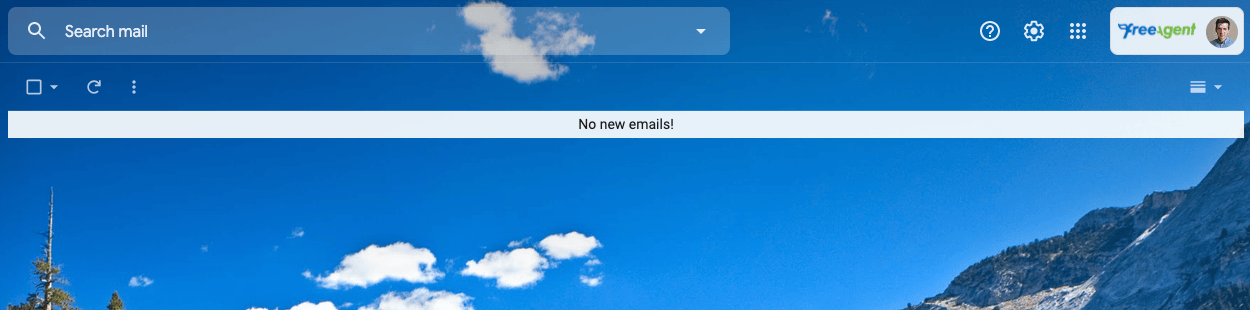
This is what my Inbox looks like. It's heavenly (it even has clouds).

Uploaded image

Note: you should probably get into the habit of archiving email threads that you've dealt with to keep your inbox free of noise. Some might call this Inbox Zero but that’s more of a religion. I’m just talking about creating a tiny habit of Kondoesque housekeeping.

Step 3: Filter out bulk emails

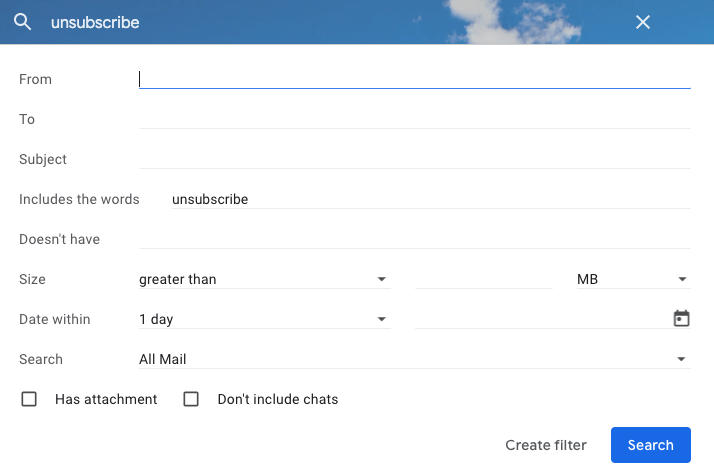
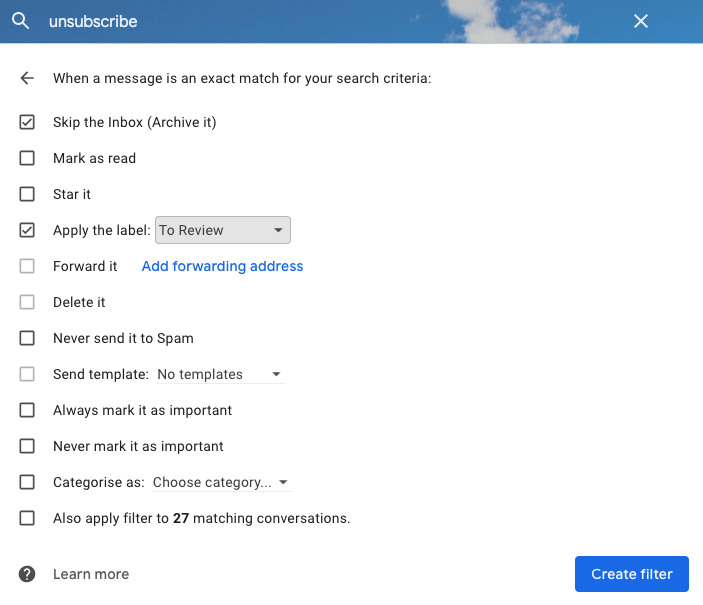
To do this, create a filter for all emails containing the word "unsubscribe". The filter will make these emails skip the inbox and apply a label called To Review (or something else of your choice).

Uploaded image


Uploaded image

Step 4: Relax and enjoy a quiet, largely interruption free, inbox oasis

This will remove 90% of the emails from your inbox and filter everything into the To Review label, which you can check infrequently, even every week or two. These filtered emails will not be important emails.

You’ll likely find other 'bulk' emails that are not unsubscribable appear in your inbox now and again. I recommend adding a new filter for each of these as and when they appear. Alternatively, block the contact if you can’t be bothered to set up a filter, or mark as spam if it is really unsolicited and unwanted nonsense.

Welcome home, email.

Many thanks to Julian Shapiro 🤙

Time Well Spent

A question that’s always worth asking yourself: is the time I’m spending doing a particular task or activity well spent? Is it adding value to you or to your business in some way? Before you start work on something, ask yourself the question. In the middle of working on something, pause and ask yourself the question. When you’ve left a meeting, reflect and ask yourself the question. Was it time well spent? If it wasn’t, try and make a change.

Meetings, especially infinitely recurring ones, are a really good test of time well spent. Meetings are typically scheduled for a minimum of 30 minutes, but more often for 60 minutes simply because that’s what Google or Microsoft have decided is the correct default. Parkinson’s Law means that these meetings will last as long as they’re scheduled for, irrespective of whether that is time well spent. It’s probably true that most meetings are not time well spent. You can change that by running better meetings, or by not holding them in the first place. There are alternative and arguably less disruptive ways to share information and make decisions.

It’s not just meetings. It’s all too easy in our hyper-connected, always-on world to spend your time doing routine work, or tasks, that ultimately have no major benefit. Slack want you to be in Slack all day but there’s no difference between being in Slack to being in Facebook or Twitter or LinkedIn all day. You’re just scrolling, channel surfing, waiting for that next dopamine hit – that “interesting article”, that hedgehog gif or an @here that, frankly, can wait until tomorrow. Or the next day. It’s a procrastination drug, a day-long meeting that everyone is participating in. Try turning it off for a while, consume in digests and try and ignore the FOMO.

Just don’t be too hard on yourself. I’ve been writing for twenty minutes and I’m now questioning the value. On reflection the writing practice is good, and maybe the three readers of this blog will take something useful away from the two minutes they spent reading it. I’m calling it time well spent.

Can I check Twitter now?