At times 2021 felt like a long, head pounding, monotonous, gruelling sequence of groundhog days. One after the other, again and again, over and over. Looking at it objectively, with a dollop of hindsight, it wasn’t that bad at all. We got vaxxed. We had fun interludes aplenty – lots of snow and sledging, short breaks around the UK, family and friends visits, even a couple of gigs. It seemed almost normal for a while, right? Then a mid-year work-related stress grenade, shortly followed by a severe bout of Covid-19 in July knocked me sideways. I’ve felt a little exhausted ever since. Maybe the virus took a larger toll than I realised. Or maybe I’m showing my age.
Musical exploration hasn’t been high up my list this year. There were only a handful of albums that I really got into: The Staves - Good Woman, Dawn Richard - Second Line, The Avalanches - We Will Always Love You, Chvrches - Screen Violence and Khalid’s Scenic Drive. I’ve started to wonder if a dulling motivation for new music discovery is an inevitability of ageing. Maybe that’s just a lazy excuse and I should double down on my inner John Peel. Despite this lull, I dug through my liked songs and made a playlist (mixtape?) of faves. I’m really pleased with it, there are some absolute gems on there.
Until succumbing to Covid we’d avoided cinemas, not that there was much on, but we managed to catch a few movies on the big screen, and more on streaming. My highlights were King Richard, Summer of Soul, Seaspiracy, Luca, No Time to Die, The Trial or the Chicago 7, The Courier and Freakscene: The Story of Dinosaur Jr.
Streaming TV is the new cinema but I don’t binge on it too much. I missed Squid Game (I watched MrBeast’s re-enaction instead), but I enjoyed Nine Perfect Strangers, Swagger, It's a Sin, Normal People, Succession, Impeachment (American Crime Story) and Inside the President’s War Room.
I tried to read more books this year and I’ve done quite well (for me). Of those novels published in or around 2021, Project Hail Mary by Andy Weir was my absolute favourite. I also enjoyed The System by Ryan Gattis, Malibu Rising by Taylor Jenkins Reid and The Night She Disappeared by Lisa Jewell. From a work perspective, I really enjoyed The Minimalist Entrepreneur by Sahil (future inspiration!) and Team Topologies.
2022 is set to be interesting. I took the red pill, so by February I’ll have left FreeAgent behind and I’ll be heading down the career/life choices rabbit hole. I’ve set my expectations pretty low, so when I’m sat in the kitchen home schooling as Covid (Omicron flavour) rages outside for the third time I won’t be too fed up. I’m not one for resolutions (well, actually I am, I just never stick to them), but hopefully I’ll end 2022 having read and written more than before.
I’ve put myself on a social media diet for a while (other than to share this post – is that cheating?), so feel free to write me an electronic mail with your thoughts and links to your 2021 lists. Long form is the best form.
I recently announced my decision to leave FreeAgent, the company I co-founded in 2007. It's been a difficult decision to make as I love FreeAgent dearly – I’m part of the furniture almost – but it’s the right time for me to hang up my well-worn CTO boots. I wanted to write a few words for posterity, so here are some of my memories from our rollercoaster journey.
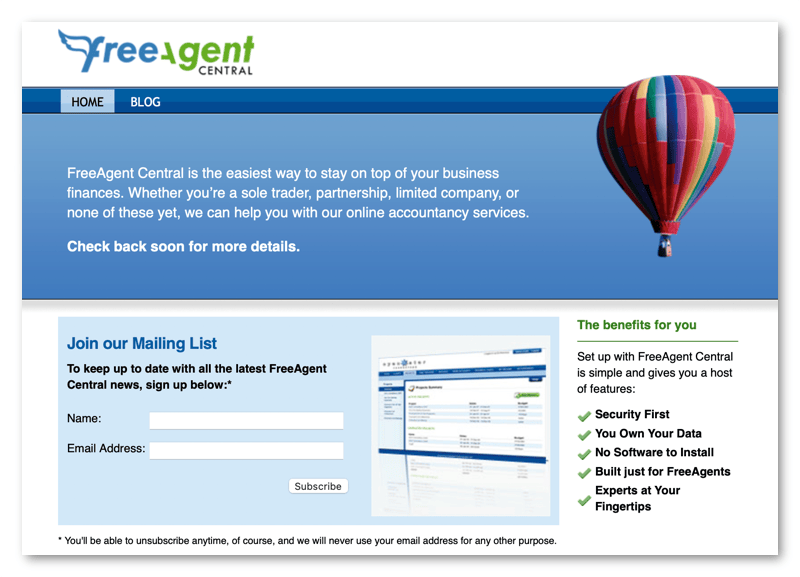
FreeAgent Central home page, March 2007. Balloon!
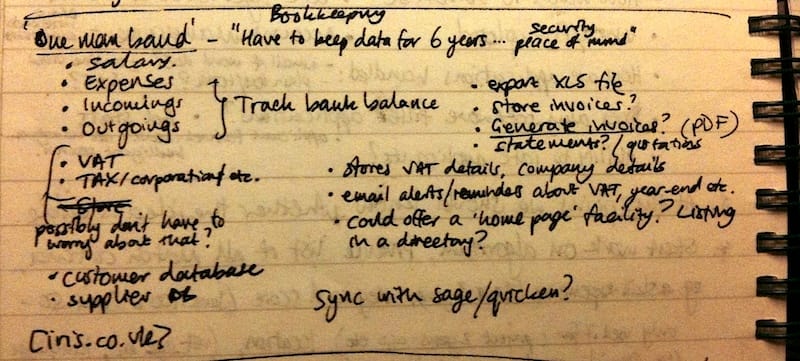
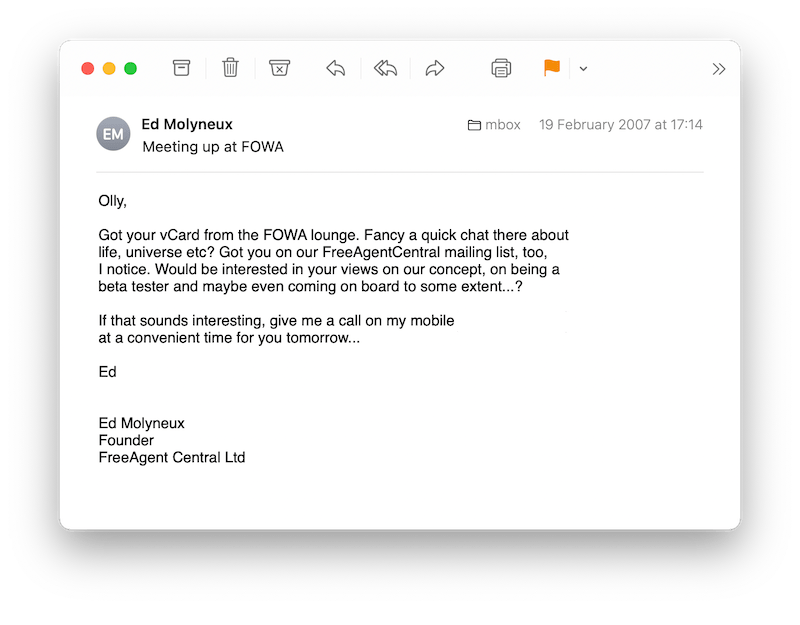
5,387 days ago (19th Feb 2007), having recently quit a contract where I was completely downhearted working on an unfathomable credit derivatives product at RBS on Bishopsgate in London, and with a bookkeeping web app called One Man Band running through my mind, I contacted Ed after seeing a message he'd posted on the back channel of the Future of Web Apps conference which we were both attending. The message said something along the lines of "Come and talk to me about FreeAgent Central: Solo Simplified" and there was a landing page at freeagentcentral.co.uk with hot air balloons. I was both deflated (unlike the balloons) – that was my idea dammit – yet excited, because Ed had actually produced something that looked great, was written in Ruby on Rails, and it sounded like there might be a chance to get involved.
Notebook scribbles of "One Man Band" bookkeeping app idea, circa 2006.
We met in the basement of a conference centre in South Kensington and I had a look at the "FreeAgent Central" prototype which looked pretty good. It had animated sliding help menus (RIP) and everything. I was impressed! We had a good chat, I said I was up for getting involved, and that was that. What followed was a blast.
I'd done some interesting work before: launched games, PC desktop publishing products, internet radio stations. I was already working for myself since I quit my full time job in 2005, set up a limited company and got a 6-month contract in a bank. So there I was, wearing a shirt, trousers and polished shoes, getting sardined on the Northern Line to Moorgate each morning but at least I was sort of a bit more charge of my own destiny.
My long term plan at that point, or rather what was in the back of my mind (I had no plan), wasn't to be a full-time contractor for the next 20 years (a sensible and lucrative option which was encouraged by my accountant at the time). The idea was to milk a couple of City contracts for as much money as possible, live reasonably frugally and build up some savings in order to try and make a living actually working for myself on my own product. Inspired by "Web 2.0" companies such as Basecamp, Flickr, De.licio.us, this lifestyle felt in reach. I did some client web design on the side but quickly discovered that this was hard work. It was frustrating dealing with nitpicking clients and the general return on investment was poor. I tried the software agency model of pitching to businesses to build web apps, but I was terrible at it.
Meeting Ed (and subsequently Roan) changed this. FreeAgent was solving a problem that I wanted to try and solve, that I actually had a bunch of experience with, using technology that I was eager to learn. It was a classic case of right place, right time.
Original email from Ed before we met for the first time
Dev days
I was lucky enough to have a decent amount of savings in my limited company so, newly liberated, I started working on FreeAgent every day from our flat in Kennington (ok, Walworth). Ed was still doing some ad hoc consultancy and Roan was still full time in the day job and working evenings at this point, so we used Basecamp to plan work with the occasional Skype call to make things feel a bit more real.
At this time the app had some core functionality and it was well-tested (following The Rails Way). It was my job to add a bunch of missing functionality, polish things and get the product into public beta and ultimately launched, which we planned for later that summer. I loved it! As well as coding and sorting out basic infrastructure (this was 'pre-cloud'), I started networking (friends, acquaintances, local freelancers from meetups I attended) to talk up the product and to get early feedback. There was definitely interest, but general excitement levels were far lower than my own. We released features weekly (we hadn't yet learned the lessons of continuous delivery!) accompanied by cheese-themed blog posts. During the summer we came to an arrangement to allow me to keep working full time until the end of the year, with Ed and Roan continuing with the day jobs.
The product came with a 30-day free trial which gave me four weeks from launch day to implement a payment system (it literally took this long – now you can do it in approximately four minutes using Stripe) that would allow the $millions to start flowing into our company bank account so we could get the Ferrari's on order. Bring it!
In the first week we got 1 paying customer. £24.
Over the next month or two we started to see a few dozen customers arrive, but it was pretty clear we wouldn't be setting up payroll any time soon. We had zero budget. By this time all three of us had new babies arrive at home, so with no money coming in I was forced to go back to my former employer who kindly offered me a 6-month contract (I think it might have been 3 days/week). We managed to keep on improving the product but it was definitely slower going. Ed focused on sales with some dev on the side, Roan and I focused on developing more features for the app. All of us handled customer support, networking, tweeting, spreading the word. Building a company is, for the majority of entrepreneurs, a hard slog and a long, grinding road. It certainly was for us, but we weren't being ground down – we were still really up for it and believed in the mission.
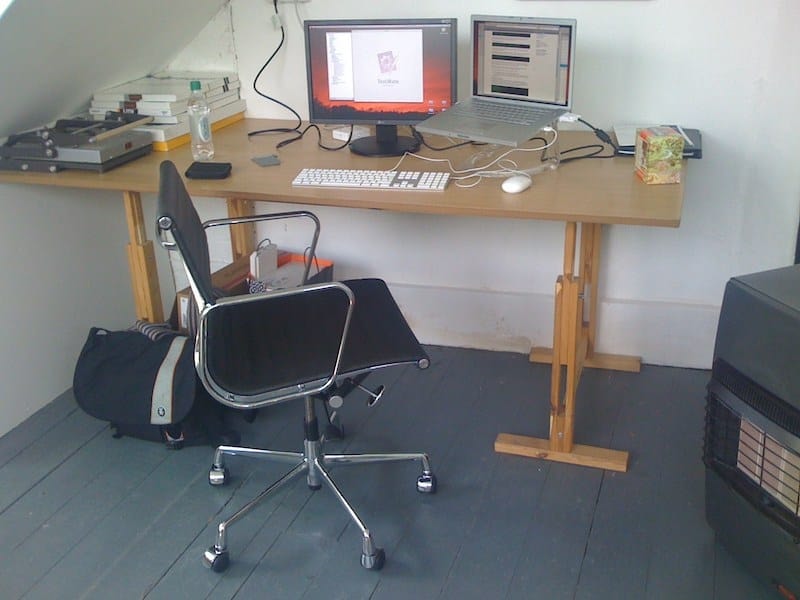
My rented desk in a freezing Iliffe Street photographers studio, early 2008
Wallets to the rescue 💸
Towards the end of 2008, Christoph Janz got in touch with Ed after seeing us mentioned in a TechCrunch article we probably badgered Mike Butcher to write. Christoph is a legend and he introduced us to another legend, Robin Klein. Between them, we secured our first investment of around £200k along with another £50-100k or so from friends and smaller angels. This is not a lot by today's standards (I currently see pre-seed - never mind seed - investments of £800k+ 🤯) but enough for us to accelerate things. Doing more with less has been a recurring theme for FreeAgent, and we got pretty good at it.
We hired a sales person on contract, focused on accountancy practices as a new channel and started to see some early success. We had about 1,500 customers in total. Ed was busy pitching to investors and an early lead with a Scottish VC led to an introduction to IRIS, the UK accounting software goliaths. IRIS ended up investing £800k with an exclusive (for a while) deal to sell FreeAgent (co-branded as IRIS OpenBooks) to their accountancy practice clients. We finally had some cash and could start paying ourselves more than £500/mo. It only took about 3 years. We were off!
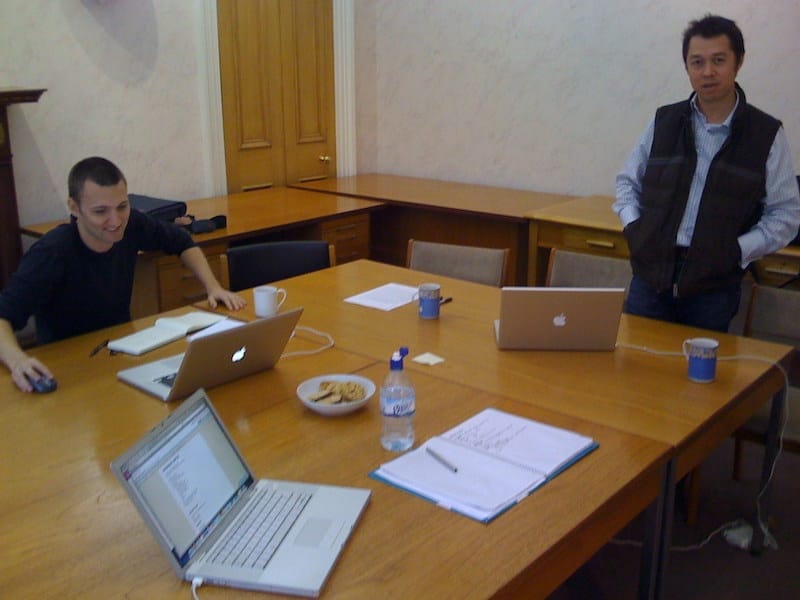
A rare founder meet up. Edinburgh, 2009
Moving country 🏴
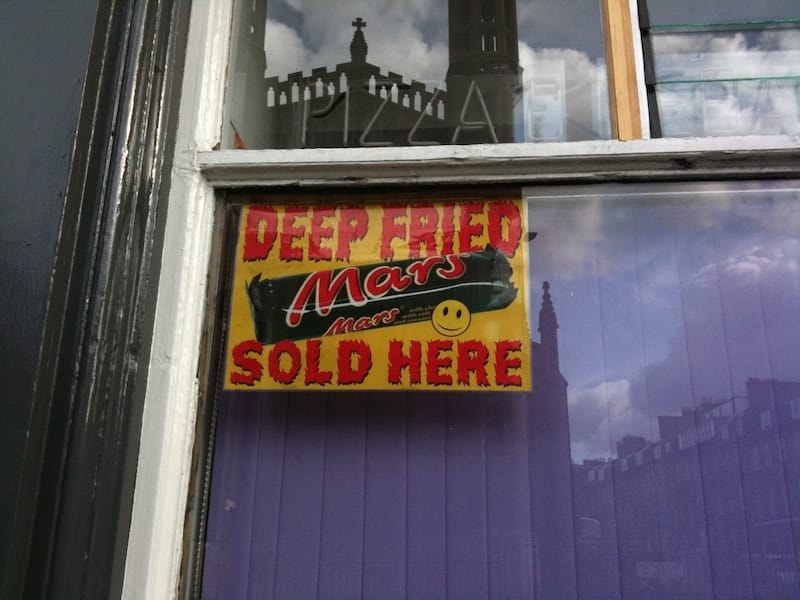
Deep fried Mars bars are for the tourists. Locals eat deep fried pizza. Or so I was told.
Although we'd been a remote company for 3 years, the plan was always to get an office in Edinburgh whenever we had the funds to do so. This was a big deal for me and my family as we’d been in London for a decade and had friends and family there. Edinburgh seemed a long way away (it is) but the opportunity to get an office and hire staff was a big one, and I felt that I needed to be there. Things were getting real. Looking back, we probably could have stayed in London and I could have commuted, but that would have been detrimental to family life and, frankly, London life in a small 2-bed with two children was getting tricker and we couldn’t afford to move somewhere bigger. There was also a murder a few yards from our flat towards the end of 2009, so getting out of Walworth to go, well, anywhere, seemed like a pretty good idea. Edinburgh it was!
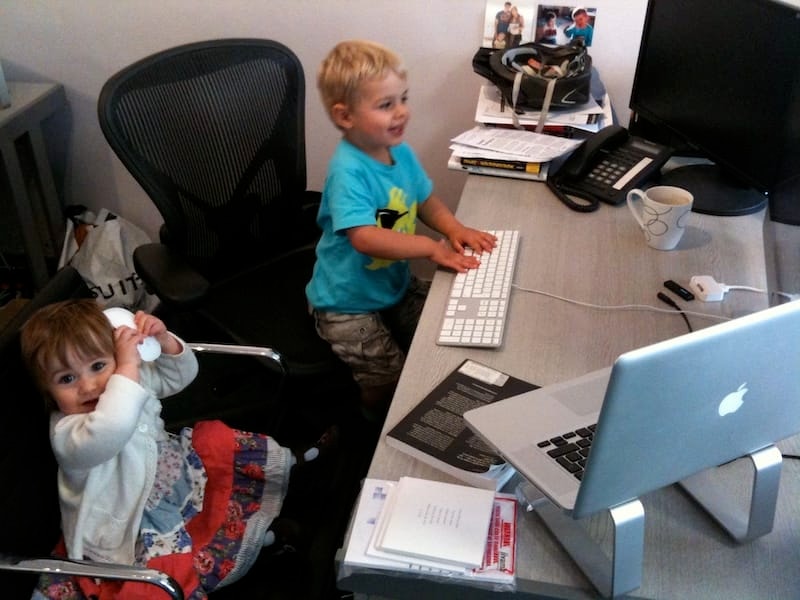
Getting the kids to “help”. My desk at the Canaan Lane office, 2010. I got the (internal) window. JB got the wall. Sorry JB.
Our first official office was on Miller Crescent in Morningside which we'd rented for a few months in 2009 (being in London, I only popped in once). Following the IRIS investment, we upgraded and moved across the road to a shared, ant-filled former prison/office on Canaan Lane where we lived for the next couple of years, gradually taking it over and expanding into the neighbouring office (the "dev pit") when our engineering team got to about 7 or 8 people. They were happy days!
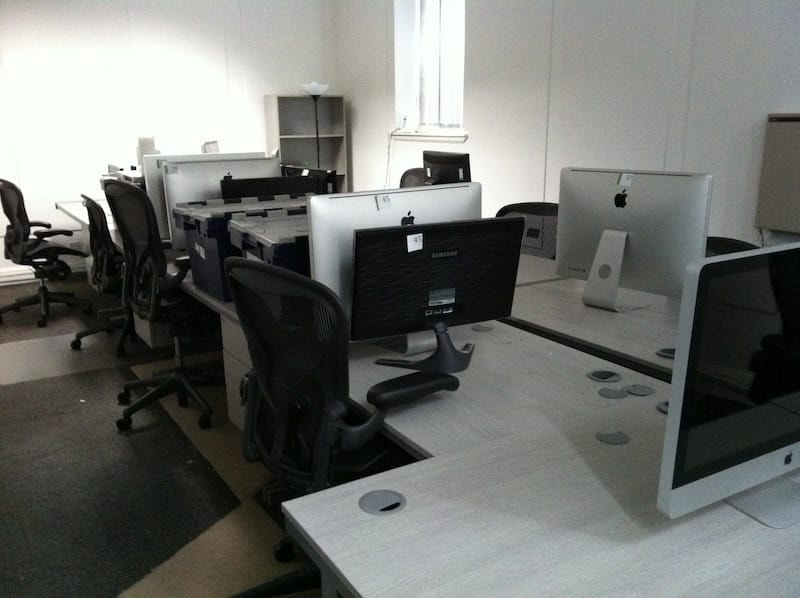
First official 'dev pit'. Heating on the ceiling, freezing at desk level. No escape from grey.
Growing pains
By 2011 we had about 6,000 customers and growth was being fuelled by a deal which saw FreeAgent (and a few other SaaS products, and ultimately Sage and QuickBooks I think felt left out) in a package offered to new Barclays Bank business customers. We took more investment from SM Trust in 2011 and moved to our first proper office, complete with fancy fit out, on Torphichen Street. I loved that office! The company was around 30 people by this stage, the IRIS deal was going reasonably well and we started to establish ourselves as one of the main players in the UK. I remember fundraising (for Ed) being a constant battle. We raised money, hired people, added features, grew the customer base... rinse and repeat. We were never profitable, it was always about the next runway.
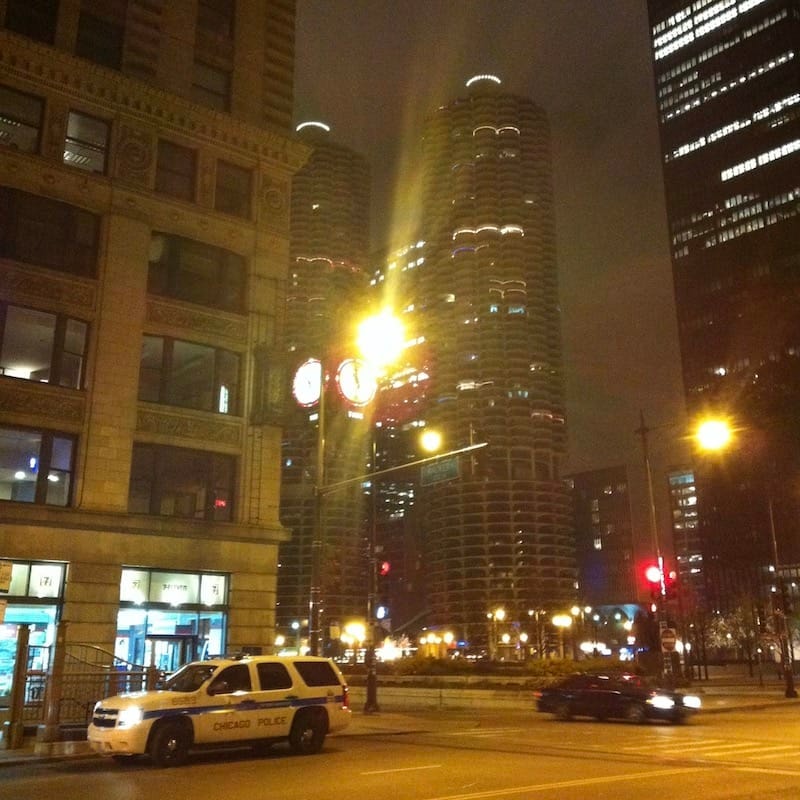
The next fundraising effort was probably the oddest. The founders of Groupon – Brad Keywell and Eric Lefkofsky – had a startup accelerator called Lightbank in Chicago. They were interested in FreeAgent and there was an opportunity for them to invest which we felt could open doors to getting FreeAgent more established in the USA. We had already made an international version ("FreeAgent Universal") which had a bit of traction despite zero marketing effort, so imagine what we could achieve with a farm of salespeople in a Groupon call centre bringing in leads 24 hours a day? Caribbean islands and private jets ahoy!
This is what was in my naive head at the time, so we flew to Chicago for 36 hours, barely sleeping, and I forgot to buy travel insurance so I had to live with the fear of my general clumsiness resulting in bankruptcy-inducing hospital bills. I got away with it.
The Lightbank deal on the table involved a modest cash investment but also involved acquiring a company, 60mo – a financial forecasting app. To be fair last thing we needed was to acquire a company that used different tech and was based in a city 3700 miles away, but we went ahead with it anyway. We were young and needed the money, but we felt getting Lightbank on board would allow us to kickstart our presence in the US (we even set up FreeAgent, Inc. – a Delaware corporation – around this time). Lightbank obviously wanted an exit for their investment in 60mo and the FreeAgent deal was a tidy way for them to achieve this. We made the most of it – the 60mo founders came on board and helped us build a specific US version of FreeAgent as well as our first mobile web offering, but we ended up parting ways a couple of years later. I felt terrible about this, still do, and it was definitely one of the low points.
Blurred memories of 36 hours somewhere in Chicago, December 2011
The following years took a similar path with customer growth being good, the product constantly getting better and investment being a constant battle. In 2013, with customer numbers over 30,000, we received an acquisition offer which went down to the wire but failed because we demanded (purposefully, sort of) too much. It was pretty exciting and something of an adrenaline rush that made the daily grind of hiring, building features, arguments about prioritisation, people issues and so on disappear for a brief period. Looking back, that acquisition would have been a better outcome financially but it was the right decision at the time. I remember being really up for it, not just because of a cash bonanza but I thought there was potential for a larger impact. At some level (like most businesses) we always struggled with not having enough resource (cash, people, time) and this deal had the potential to change all that, but on the flip side it could equally have been a disaster. Things happen (or don't) for a reason.
Hot on the heels of M&A term sheet drama, we had another potentially big private equity investment which was equally exciting but ultimately didn't work out, so we ended up taking on convertible debt, then some venture debt. Amazingly there were still some fundraising techniques we hadn't yet tried, so in 2015 we ran a crowdfunding campaign which was a total slog, but we got there in the end and raised £1m from hundreds of FreeAgent customers. Thank you! 🙏 We moved to a larger office – our amazing current abode – and no doubt starting thinking about the next fundraising round.
A glimpse of the future
In 2016 we took part in a pitch to RBS/NatWest for a co-branded pilot they wanted to run with an accounting platform. We were thrilled to be selected as their preferred product. We had 50,000 customers and started working with the bank to get some of their customers onboard, and to develop direct automated bank feeds to make the integration feel really slick (automated bank feeds were still a problem at this stage, pre-Open Banking).
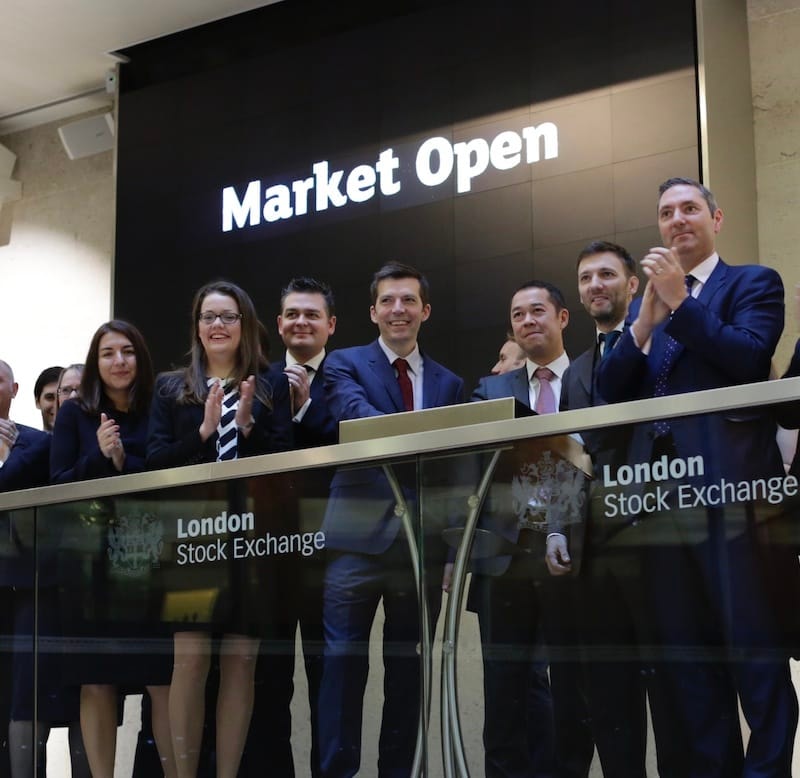
At the same time something else was taking shape – we had planned to take the company public on AIM. This was the largest (and most expensive) fundraising we'd done. We'd see great PR, a chunky cash injection and could (in theory) raise capital more easily in the future. An IPO would also be the 'liquidity event' that would allow our early investors, as well as our longer-standing staff who had options, to finally cash out (no such luck for the founders though as it turned out secondaries are frowned upon in the City). Our numbers looked pretty good and the merchant bankers were happy! An enormous amount of work followed over many months, mainly by Ed and Kath, our CFO at the time – I just had to deal with the tech due diligence which I'd been subjected to several times before.
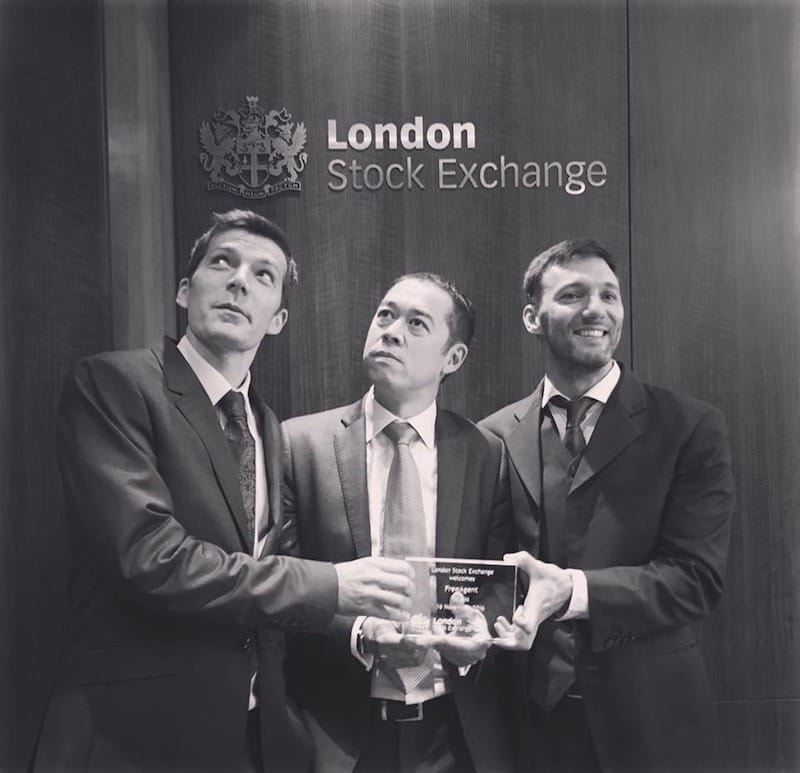
On 16 Nov 2016 we 'rang the bell' (pressed a fake button) in the grand atrium of the London Stock Exchange. Y'all were free to buy shares in FREE! 84p each. Bargain!
Never not taking things seriously
Plot twist
We knew it could be tough on the public markets. If you consistently met your projections (and didn't sandbag) you would be rewarded with a buoyant share price. If you failed, you'd be punished and see the share price crash through the floor. This seems pretty brutal because it is. We had the common 'honeymoon' period where the share price grew 50% or more, but after a while it was hovering several points below our IPO price despite growth being pretty good and our financial projections being fairly spot on 🤷. It definitely had its moments, but I found this period a little tough because the vibe (for me as an exec on the team – hopefully not for most of the staff) changed. It kinda had to as we were now a PLC. At the end of a really exciting chapter, the start of the next one is always going to be a little underwhelming. Hard act to follow.
In early 2018, with the share price down but the NatWest arrangement working well, we received a very unexpected term sheet – the bank wanted to acquire the company. And after a lot of negotiations, they did! Funny how things turn out.
It seems pretty obvious in hindsight, but we genuinely had no idea that an acquisition would be 'a thing' at the time, but I'm glad it happened and not just for ££ reasons. It was, without question, the best outcome for the company since it brought investment, stability and a heap of opportunity. The last three years have validated this, especially during the pandemic. We’ve grown the business faster than ever, customers still love the product and there’s a rosy outlook.
It would have been tough to do that alone.
Epilogue
I have no plans for what's next, unless being focused on trying not to do anything in particular is considered a plan. I’m tired and I need a break – 15 years is a long time to be on call.
Starting another business, at least a high growth venture-backed startup, sounds a bit tiring right now but I wouldn't rule out an indie hack – I still love to create. I’ll see if there’s interest from other companies in advisory or non-exec positions and I have a list of "articles to write" which I've struggled to make a dent in, so maybe I'll write more. And take more photos. Or maybe I won’t!
Time will tell.
I’ll sign off with a few stats from my time at the company. I have no doubt these numbers will keep on rising, and I’ll be stoked to hear how things evolve in the years ahead.
E praeterito ad futurum! 💚💙
120,000 Customers (~690,000 accounts created)
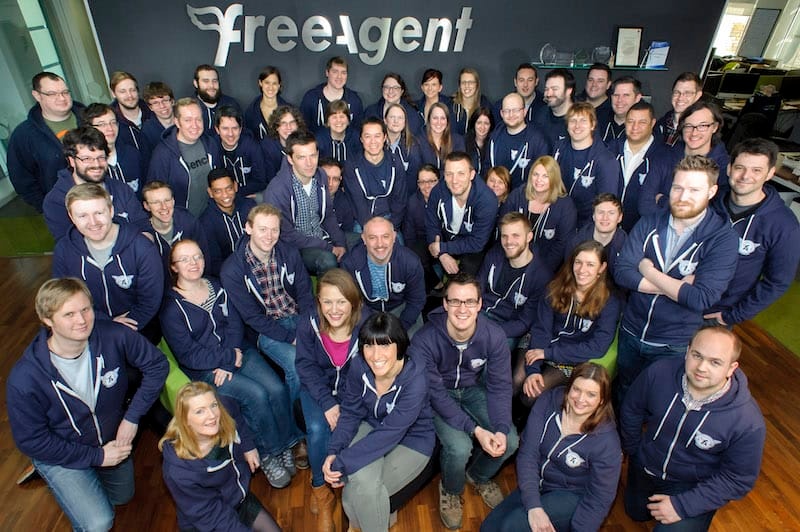
260 Staff
1 Edinburgh HQ
70 WeeAgents (babies born since we founded the company)
I thought about writing a “2020 in Review” article that was just a blank page, but rather than being facetious I thought I'd write about some of the music I listened to instead.
As I get older, I’m increasingly less interested in discovering the most exciting underground sounds, something I used to be obsessed with. I pay for Spotify but I try and stay away from its bot-generated playlists. It might be just me, but I generally don't get 95% of what they suggest. My Discover Weekly in particular is a complete mystery that makes no sense and bears no resemblance to my tastes. Based on this, I'm pretty sure robot overlords won't be taking over any time soon.
My nostalgia of the enjoyment of spending far too long reading inkies and hanging around in record shops means I still love listening to albums. Don’t get me wrong, I love new “singles” (I am so old I know), and I do create the odd playlist, but typically what I enjoy most is discovering an album that I can’t stop listening to in its entirety. 2020 had quite a few. You might even call it a vintage year.
When I find an album I love, I'll buy it. I'm aware that artists typically earn very little via streaming services, so it makes me warm and fuzzy to give a bit back (especially via Bandcamp). I also want to own the music outright, and I want to listen to it in at least 16-bit, 44KHz because, well, it's 2020 and we have streaming TV in 4K so why are we subjecting ourselves to music in 192kbps MP3s and AACs? I don't buy Hi-Res audio, although Bandcamp sometimes gives you such a download. I probably would buy it, but since Bluetooth audio via high(ish)-end cans like Bose QC 35s and AirPods Pro don’t even support it, what's the point?
There are still burning embers of my old DJ life which means I still love dance music, specifically deep house, nu jazz, disco and Balearic. I did buy a chunk in 2020 (and even made a mix, but I'm not dwelling on that here. Maybe I’ll do another write up on the dance side of things, but I genuinely know next to nothing about the scene other than the records (ok, WAVs) that I bought.
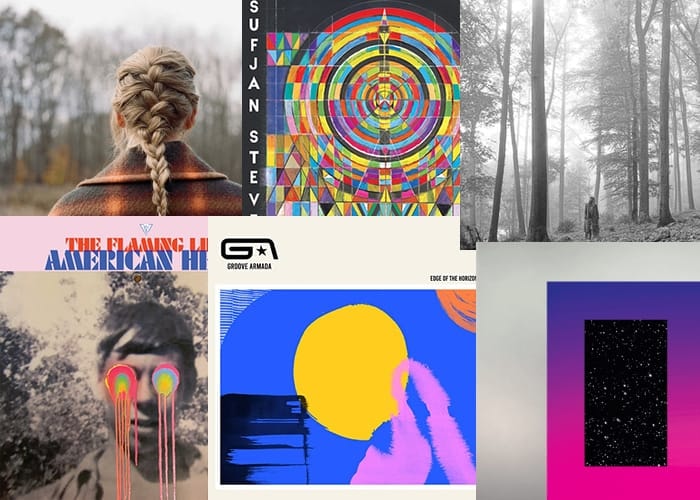
So here's my 2020 album list, In order of most listened to.
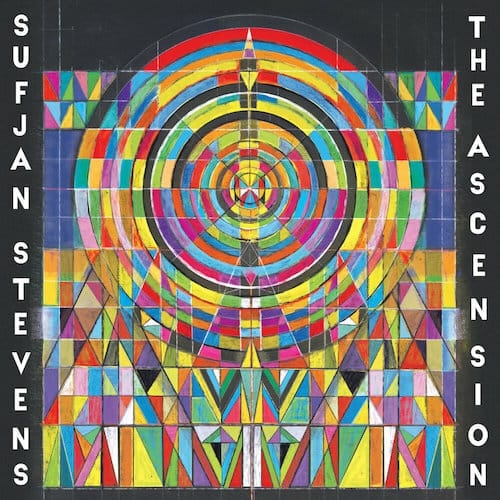
Despite liking the idea of liking Sufjan Stevens, the reality of listening to one of his albums has never lived up to expectations for me. I felt the same way about Nick Drake, Bright Eyes and countless other well regarded singer-songwriters.
I sort of always have been but I'm really in the mood for spaced-out dreamgaze right now. Coronavirus continues to circulate and dominate our lives, autumn broods outside while we hunker, locked down, inside our houses. As with American Head, and to some extent Folklore, the soft keys and subdued mood of The Ascension fits 2020 perfectly for me.
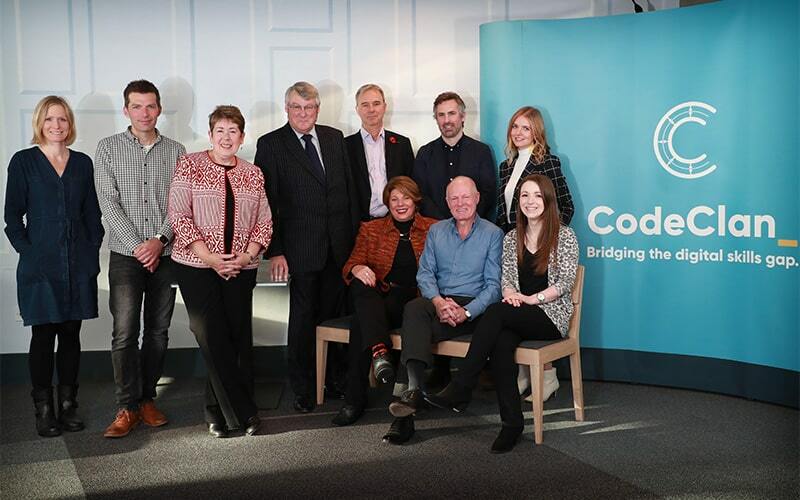
Around five and a half years ago I was asked by Polly if I would join a supervisory group who were tasked with understanding the feasibility of creating a digital skills academy for the software industry in Scotland. The idea was that this academy would train workers in software development over a 16 week course, then help them find jobs within the industry. The ultimate goal of this initiative was to help to bridge the increasing digital skills gap we were seeing in Scotland. Understandably, there were people who thought this couldn’t be done. Two of the biggest concerns were that the revenue model would never work and, perhaps more worryingly, that it wasn't possible to teach someone to code from scratch in 16 weeks. We went ahead and did it anyway.
After a lot of hard work (not on my part really!) the academy became a reality in June 2015 with the official announcement of CodeClan as "the UK’s first dedicated accredited software skills academy". The first cohort of students started in September 2015!
As with all startup businesses, the journey has been a rollercoaster of highs as well as lows. Some of the hard times were particularly pronounced since CodeClan is a social enterprise and the course was being offered at less than cost (the difference being made up by the partner programme). Yet, despite these challenges, the company has not only survived, it has thrived and forged ahead even in the face of the most difficult business challenge of modern times – a global pandemic.
CodeClan is now operating across three sites (Edinburgh, Glasgow, Highlands & Islands) and they recently celebrated 1,000 graduates which is an incredible milestone. At FreeAgent we have hired six CodeClan graduates over the years, all of who are amazing (and are all still with us).
It's a remarkable achievement.
Five years on, it's time for me to step down from the CodeClan board. I've thoroughly enjoyed being a board member, it has been a brilliant, rewarding journey – a privilege, really – and I've learned a huge amount from the experience, from my board colleagues as well as Polly (CodeClan Chair), Melinda (CEO) and her excellent team.
Thank you to everyone for letting me be part of it all and I look forward to seeing where CodeClan goes next! 👋
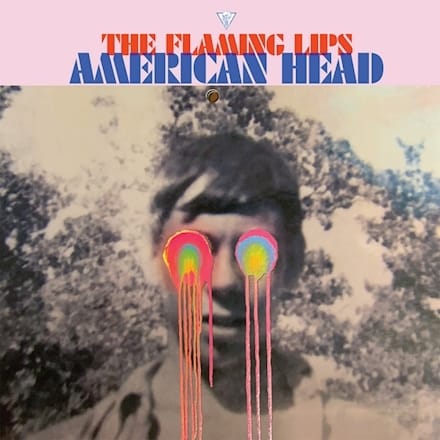
Many (21!) years ago, when I was in the mood for relaxing to some spaced-out dream rock I'd listen to Spiritualized or The Soft Bulletin by far out American odd-band, The Flaming Lips. They were wonderful albums. The follow up to The Soft Bulletin was Yoshimi Battles The Pink Robots, which was the band's big commercial success, although for me it wasn't quite up there with Bulletin. From these giddy, world conquering heights it all seemed to tumble downhill for them rather quickly and despite releasing 12 albums since, none of them ever hit the mark for me (or the professional critics).
The Lips' 16th album, American Head was released this week and I decided to give it a listen, and I'm so glad I did! Some might call it pastiche, but I don't care. Not for me. It's a band returning to their roots. It has the same blissed out vibes as their earlier classics and it's a total delight to listen to.
Once upon a time I used to buy vinyl records and play them in dark rooms full (sometimes) of people. I used to record mixes to C90 cassette (!), and eventually on CD, and I'd design covers and send them to willing listeners I met on obscure internet mailing lists in the 1990s. They were halcyon days ☀️
I flogged my decks and mixer in 2011 and haven't bought vinyl since the mid-00s (I still have all my records in the garage though, if anyone wants them?). I do miss it a bit, but life moves on.
I still love the music though and my tastes in 'dance' music haven't really changed that much. The music might be similar but the technology has moved on enormously. I can now instantly buy tracks in lossless digital format for a fraction of what I'd pay for vinyl even a decade ago, and I can mix them up with nothing more than an iPad and the Traktor DJ app which, while not quite a substitute for the tactile 1200s experience, is still remarkably satisfying.
At the start of lockdown I bought a bag of tracks from Juno Download and threw a new mix together.
Years now fly by. 2019 feels more of a blur than any previous year, which is probably the ageing process. Some great highs this year, but sadly some deep, dark lows. 2019 was definitely a year where I’ve felt like there’s been a lack of ‘thinking time’, but despite that I always seem to do enough to pull together an annual cultural highlight list.
Music
Yeah I still do albums:
Michael Kiwanuka- KIWANUKA (album of the decade?)
Nina Nesbitt - The Sun Will Come Up, The Seasons Will Change
The Cinematic Orchestra - To Believe
Shura - forevher
Bring Me The Horizon - amo
Kindness - Something Like A War
Anna of the North - Dream Girl
Sam Fender - Hypersonic Missiles
Charli XCX - Charli
Books
Didn't read nearly enough but here are some highlights:
This Could Be Our Future - Yancey Strickler
An Elegant Puzzle - Will Larson
Shape Up - Ryan Singer
Daisy Jones and the Six - Taylor Jenkins Reid
The Sun Does Shine - Anthony Ray Hinton
It Doesn't Have To Be Crazy At Work - Jason Fried and David Heinemeier Hansson
I always get this feeling of gritty ambition at the start of a new year. Those pre-Christmas months, from the start of autumn through to winter take their toll, and while Christmas is a special time of year, for us it's usually hectic in one way or another so not exactly conducive to relaxation. Those quiet days between Hogmanay and back to work/school are when I finally feel I have time to relax, reflect and re-energise. It's this state of mind, free of hurry and stress, that seems to result in a surge in creative ideas for me. I imagine it's the same for many people, hence all the 'year in review' lists and eager self-improvement resolutions. It feels good to set goals... when you're up for taking them on.
Renovation photo
I haven't had a year as chaotic as 2018 for a while. We spent nine months of the year out of our ageing house while it underwent a much-needed renovation which was all-consuming, requiring far more effort – mental and physical – than I ever imagined (and it turns out construction projects are identical to software projects). The end product looks great though. Oh, and in the middle of all that we sold the company which was the business rollercoaster to end all others (and there have been a fairfew over the years).
It's therefore no surprise that I couldn't devote as much time as I'd like to films, books and music in 2018 but here are a few of my highlights. Happy new year!
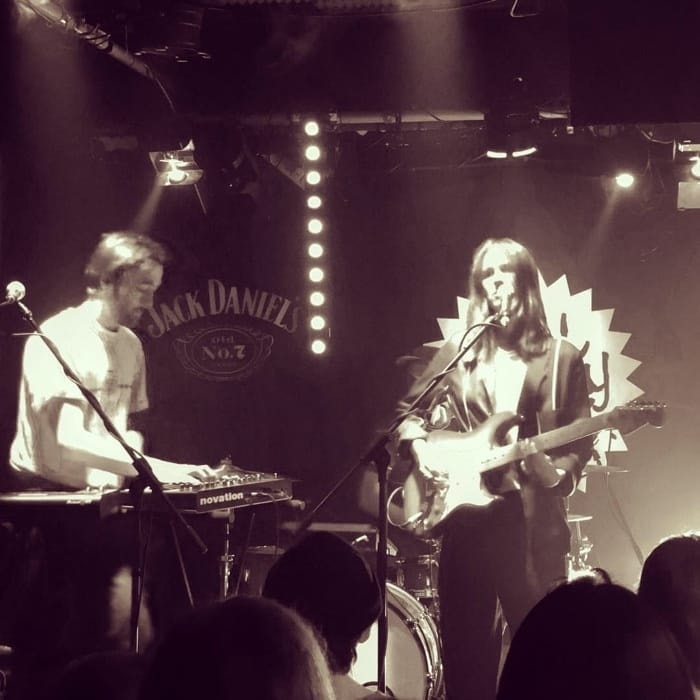
Art School Girlfriend @ Sneaky Pete’s
Music
Albums and EPs in no particular order:
Robyn – Honey
Lady Gaga, Bradley Cooper – A Star is Born Soundtrack
Chvrches – Love is Dead
Christine and the Queens – Chris
FM-84 – Atlas
Art School Girlfriend – Moon
Courtney Marie Andrews – May Your Kindness Remain
Kamasi Washington – Heaven and Earth
Kilo – Backwater
DJ Koze – Knock Knock
Film & TV
(I think a few were from later 2017 but, hey, ¯\_(ツ)_/¯)
A Star is Born
BlacKkKlansman
Hearts Beat Loud
The Defiant Ones (TV)
The Eyes of Orson Welles
Coco
Wild Wild Country (TV)
Black Panther
Three Billboards Outside Ebbing, Missouri
Manhunt: Unabomber (TV)
Books
Of what I read in 2018, not necessarily published in 2018:
How the Internet Happened: From Netscape to the iPhone – Brian McCullough
The Party – Elizabeth Day
If We Were Villains – M. L. Rio
Accelerate: Building and Scaling High-Performing Technology Organizations – Nicole Forsgren
Factfulness: Ten Reasons We're Wrong About the World – and Why Things Are Better Than You Think – Hans Rosling
The Hate U Give – Angie Thomas
Coal Black Mornings – Brett Anderson
Only Human (Themis Files, #3) – Sylvain Neuvel (and the first two books, Sleeping Giants and Waking Gods)
Why We Sleep: Unlocking the Power of Sleep and Dreams – Matthew Walker