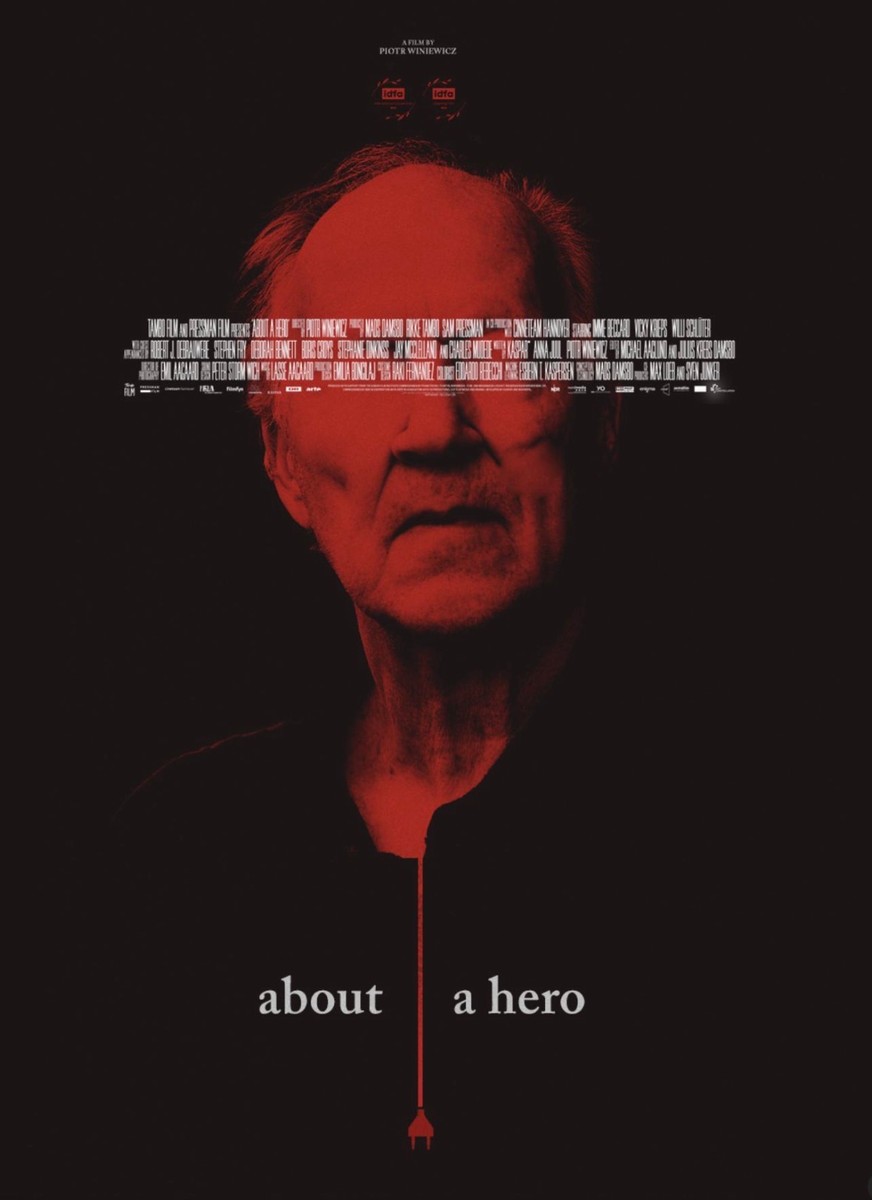
I went to the premier of About a Hero yesterday evening and while I didn’t think the film itself was very good, it feels like a prototype for where filmmaking is heading.
The idea for the film apparently came from a a Werner Herzog quote:
A computer will not make a film as good as mine in 4,500 years.
Having read this, the film’s director, Piotr Winiewicz, decided to train an AI on Herzog's collected works and have it produce a script, which forms the narrative of About a Hero. In addition, Winiewicz used deep fake technology to replicate Herzog’s voice and even (in small part) his face.
It’s a strange, absurd, hard to follow film (at least for my micro-brain) that I didn’t enjoy watching, but I’m very intrigued about the process they went though to build Kaspar (the AI model). Having done my fair share of prompting, I imagine the input prompts to produce a script like this were complex. The director and one other were credited as writers alongside Kaspar, but did they edit the final script? Or are they credited for being prompters?
There are lots of nods to other films and directors (2001 being the most obvious). Were these part of the prompt (“include references to classic Cronenberg, Lynch and Kubrick”), or did they edit them in after? Was this the case with the toaster sex scene too (honestly, don’t ask)? I’d really like to know.
While this is a film dripping with irony, what does it mean for the future of movies and TV? I’m convinced deep fakes are going to become the norm, whether in part or wholesale, and AI is probably already involved in scriptwriting. Just as the arrival of Pixar resulted in a lot of redundant 2D animators, AI will result in the same for the 3D variety.
This is “progress” in the technological sense. New tools, new processes, new efficiencies. I just hope it’s progressive and not regressive in the artistic sense.